By Dr. Monika M. Doss, DBA – Progressive Work Institute Founder, Executive Director
Organizational behavior scholar-practitioner with an emphasis on work design that reduces burnout, improves worker well-being, and optimizes organizational performance through Progressive Work.
The global workforce is in the midst of an upheaval, as workers continue to grapple with the pervasive issue of burnout. As defined by Christina Maslach, burnout is not merely an individual problem but a systemic one—a response to chronic workplace stress that has gone unmanaged. Despite decades of research and intervention, this issue remains entrenched, with severe consequences for both workers and organizations. The traditional 9-to-5 schedule, though once a revolutionary step forward, now feels like an anachronism in a world transformed by technology, globalization, and evolving worker needs.
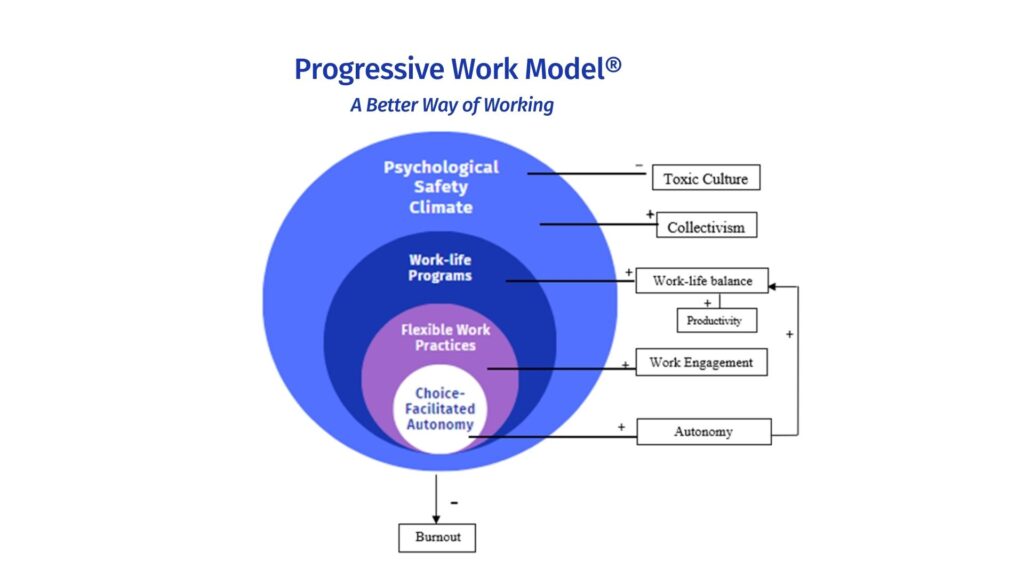
The solution is not to tinker at the edges of current work design but to embrace a new paradigm: the Progressive Work Model (PWM). This empirically designed framework integrates four pivotal components—choice-facilitated autonomy, flexible work practices, psychological safety climate, and work-life programs—to address burnout at its root.
The Case for Change
Burnout affects not only individuals but entire economies. In the United States alone, burnout is estimated to cost over $100 billion annually in healthcare costs. Its effects ripple through organizations, increasing turnover, reducing productivity, and eroding worker engagement. Post-pandemic, these issues have been further magnified by the Great Resignation, with millions leaving jobs that no longer meet their needs.
Traditional work exacerbates these problems. Born out of the industrial era, the 9-to-5 was designed to maximize productivity in manufacturing environments. But today, more than 80% of jobs rely on knowledge work, where output is not tethered to time spent in a physical space. The rigidity of this model limits workers’ autonomy, a key factor in mitigating burnout.
Flexible Work Practices: A Modern Imperative
Flexible work practices offer a promising alternative, allowing workers greater control over when, where, and how they work. Empirical studies consistently show that flexibility correlates with increased job satisfaction, reduced turnover, and better mental health outcomes.
For example, hybrid work arrangements, which blend remote and in-office work, have shown effective in reducing stress and improving work-life balance. Similarly, compressed workweeks—such as the four-day week—have shown significant benefits. In a recent UK pilot program, organizations adopting a four-day workweek reported a 57% increase in worker retention and a 16% decrease in burnout.
Flexibility is not a monolith, however. It encompasses a range of practices, including flextime, job sharing, and self-scheduling. Each offers unique advantages, but all share a common thread: they prioritize workers’ needs without sacrificing organizational goals.
Beyond Flexibility: The Role of Autonomy and Support
While flexible work practices are essential, they must be part of a broader framework that includes choice-facilitated autonomy and robust work-life programs. Choice-facilitated autonomy allows workers to choose their job status when accepting a job rather than the organization pre-determining it—whether as an employee or independent contractor—based on their needs and preferences. This empowers workers to negotiate terms that align with their personal and professional goals, addressing pay disparities and fostering a sense of control.
Work-life programs further support workers by providing resources to navigate the demands of work and home. These programs can include mental health services, family leave policies, and childcare support. Crucially, they help create a psychologically safe climate where workers feel valued and supported.
The Business Case for the PWM
Adopting the Progressive Work Model is not just a well-being imperative; it is a strategic one. Organizations that prioritize worker well-being stand to gain a competitive edge. High levels of worker engagement—inversely correlated to burnout.
Moreover, reducing burnout can significantly lower costs associated with turnover and absenteeism. Gallup estimates that burnout accounts for 15-20% of voluntary turnover costs globally, amounting to billions of dollars annually.
Challenges and Opportunities
Transitioning to a progressive work model is not without challenges. Organizations must navigate logistical complexities, cultural resistance, and the need for robust measurement tools to assess the impact of new practices. However, the potential rewards far outweigh these hurdles.
The COVID-19 pandemic demonstrated that change is possible. Overnight, remote work became the norm for millions globally, demonstrating that flexibility can coexist with productivity. The lessons of this period must not be squandered.
A Call to Action
As scholar-practitioners, we have a unique responsibility to bridge the gap between theory and practice. The Progressive Work Model is grounded in rigorous research, offering a roadmap for organizations ready to move beyond outdated paradigms.
To leaders hesitant to embrace change, I pose this question: Can we afford not to? Workers are demanding a better way of working, and the costs of inaction are too high to ignore. The time has come to rethink, redesign, and reimagine how we work—not just for the sake of workers but for the health and sustainability of our organizations and societies.
The future of work is not a return to the past. It is a step forward into a more equitable, flexible, and human-centered world. Let us have the courage to lead the way. Signup for our free pilot program today.