By Dr. Monika M. Doss, DBA – Progressive Work Institute Founder, Executive Director
Organizational behavior scholar-practitioner with an emphasis on work design that reduces burnout, improves worker well-being, and optimizes organizational performance through Progressive Work.
In a world still reeling from the upheavals of the COVID-19 pandemic, workforces across the globe are grappling with the persistent specter of burnout. Decades of research have spotlighted the catastrophic toll burnout exacts on physical health, mental well-being, and economic productivity. Amid the clamorous calls for solutions, one cultural paradigm emerges as a promising remedy: collectivism. Rooted in the prioritization of group goals and interdependence over individual achievements, collectivism is more than a cultural philosophy—it is a necessary shift for a workforce in crisis.
Burnout is not new; it has persisted globally for over 50 years, incurring staggering economic losses through turnover and diminished worker engagement. Its roots are deep and multifaceted, arising from unreasonable workloads, pay inequities, toxic work environments, and individualistic organizational cultures that often pit workers against one another. Recent research highlights a compelling antidote: designing work systems that embrace collectivist values.
The Global Workforce Crisis: A Case for Collectivism
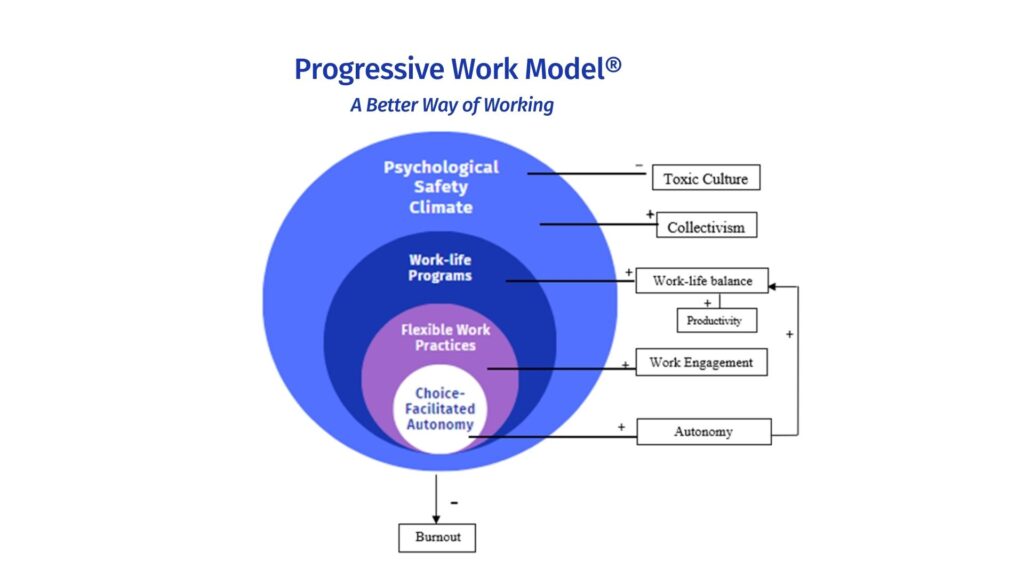
Modern workplaces are evolving. Trends like remote and hybrid work demonstrate that collaboration and shared responsibility are not only possible but desirable. These changes create opportunities for organizations to embrace collectivist principles in ways that foster team cohesion and reduce burnout. The Progressive Work Model (PWM), grounded in theory, serves as a blueprint for this transition. By emphasizing a psychological safety climate to make the functional work design components more effective—choice-facilitated autonomy, flexible work practices, and supportive work-life programs—the PWM provides a framework to prioritize worker well-being while optimizing organizational performance.
The cultural dimension of collectivism has already shown its potential. Data from 8,484 workers across 81 countries and 6 continents indicate that collectivism positively affects functional work design components’ reduction of burnout. Whether in North America, Europe, or Oceania—typically viewed as bastions of individualism—or in collectivist strongholds like Africa, Asia, & Central/South America, fostering group-oriented work cultures has universal benefits. The results are clear: prioritizing collectivism is not merely an academic ideal but a practical necessity.
Flexible Work Practices: A Collectivist Touch
Flexibility in work arrangements is often lauded as a hallmark of modern work design. However, its effectiveness hinges on the cultural lens through which it is implemented. In collectivist frameworks, practices like flexible scheduling, job sharing, and phased retirement resonate deeply. These approaches empower teams to function as cohesive units, fostering trust and interdependence while allowing individual contributions to flourish within the group context.
For instance, in Asia, where collectivist values strongly influence workplace dynamics, practices such as part-time work and compressed workweeks were identified as top burnout mitigators. Similarly, Oceania’s workforce found immense benefit in flexible year arrangements and remote work. By tailoring these practices to regional preferences, organizations can maximize their impact.
Work-Life Programs: Bridging Personal and Professional Worlds
Work-life programs provide a vital bridge between the competing demands of personal and professional life. In collectivist cultures, these programs are more than mere perks; they are essential supports that uphold the social contract between workers and employers. Programs such as maternity leave, mental health assistance, and financial counseling resonate with collectivist ideals, emphasizing group well-being and mutual care.
Research reveals that even in traditionally individualistic regions, collectivist-inspired work-life programs have gained traction. For example, North America’s workforce showed a strong positive response to programs like paternity leave and dental insurance. These findings underscore that collectivism is not bound by geography but by the shared human need for connection and care.
Psychological Safety: The Keystone of Collectivism
Central to collectivist work environments is the concept of psychological safety—the belief that one can express ideas, concerns, and questions without fear of reprisal. Psychological safety transforms workplaces from hierarchical battlegrounds into collaborative ecosystems. Workers feel valued not only as individuals but as integral members of a collective mission.
Studies confirm the strong link between psychological safety and reduced burnout. Leaders play a pivotal role in cultivating this environment by promoting empathy, active listening, and conflict resolution. Yet, despite its critical importance, psychological safety remains elusive in many organizations. Bridging this gap requires deliberate effort, including training managers to foster inclusive and supportive workplace cultures.
The Call to Action: Shifting to Progressive Work
For organizations aiming to remain relevant in a rapidly changing world, the adoption of collectivist work principles is not optional—it is imperative. The Progressive Work Model offers a scalable, evidence-based approach to integrating collectivism into workplace design. Through its emphasis on autonomy balanced by collaboration, flexible arrangements, and holistic worker support, the PWM positions collectivism as the cornerstone of organizational resilience.
Implementing this shift requires bold leadership. Organizations must move beyond token gestures and fundamentally rethink their work structures. This means prioritizing policies and practices that align with collectivist values while remaining adaptable to regional nuances. It also involves a commitment to continuous improvement, informed by worker feedback and emerging trends.
Concluding Thoughts: Healing Through Collectivism
The global workforce stands at a crossroads. The old paradigms of individualistic, hierarchical profit-driven work are no longer sustainable in the face of widespread burnout and disengagement. Collectivism offers a new path forward—one that emphasizes shared purpose, mutual support, and holistic well-being. By embracing these values, organizations can not only heal their workers but also build a foundation for enduring success in an increasingly interconnected world.
As stakeholders, leaders, and change-makers, the challenge before us is clear: to transform workplaces from arenas of competition into communities of care. By making collectivism a guiding principle, we can create work environments where every worker feels valued, every voice is heard, and every individual thrives within the collective whole. The time to act is now.
Be part of the solution. Signup for our free pilot program today.