By Dr. Monika M. Doss, DBA – Progressive Work Institute Founder, Executive Director
Organizational behavior scholar-practitioner with an emphasis on work design that reduces burnout, improves worker well-being, and optimizes organizational performance through Progressive Work.
In workplaces worldwide, women face a silent crisis—exhaustion. This phenomenon transcends geographic, economic, and cultural boundaries, infiltrating every sector and profession. Despite decades of workplace reforms, the conventional structures governing most organizations remain ill-equipped to address the nuanced needs of women balancing work, personal responsibilities, and societal expectations. The result is a workforce where women disproportionately experience exhaustion—a dimension of burnout.
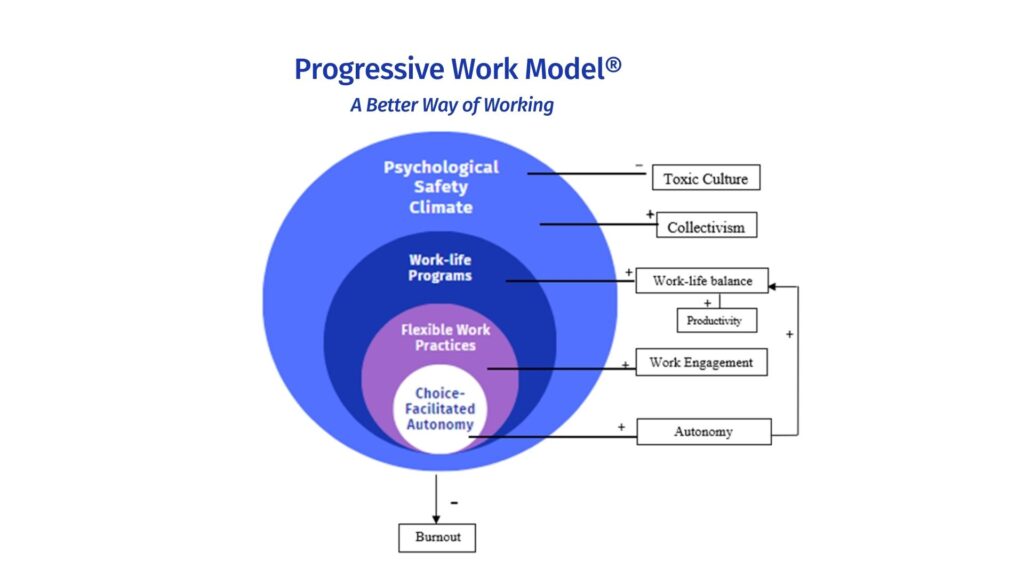
While the world increasingly acknowledges mental health challenges in the workplace, the focus on gender-specific solutions remains limited. To effectively address this pervasive issue, organizations must adopt a progressive approach to work design. The Progressive Work Model (PWM), an empirical framework rooted in psychological safety, choice-facilitated autonomy, flexible work practices, and comprehensive work-life programs, offers a pathway to mitigating women’s exhaustion while fostering sustainable organizational success.
Understanding the Exhaustion Epidemic
Exhaustion is not merely fatigue; it represents a state of physical, emotional, and psychological depletion caused by prolonged stress and unrelenting demands. Among women, this issue is exacerbated by traditional workplace practices that fail to accommodate the dual burden of professional and personal responsibilities. Research confirms that women are more likely than men to experience exhaustion due to systemic inequities such as pay gaps, limited access to leadership roles, and insufficient workplace support for caregiving duties.
Rigid work schedules, hierarchical management styles, and insufficient autonomy exacerbate work-family conflicts, perpetuating exhaustion. The legacy of patriarchal organizational cultures compounds these challenges, leaving women to navigate structures that were never designed with their needs in mind. This systemic oversight not only harms women but also undermines organizational productivity and retention.
The COVID-19 Reckoning
The COVID-19 pandemic brought the issue of women’s exhaustion into sharp focus. Remote work became a necessity, highlighting the inadequacies of traditional work designs. Many women found themselves balancing professional responsibilities with increased caregiving duties, often at the expense of their mental health. This period underscored the urgent need for adaptable, progressive work arrangements that support well-being and resilience.
The PWM, developed as a response to such challenges, demonstrates how organizations can modernize their approaches to work. By empowering workers with choice, flexibility, and supportive programs, the PWM aims to dismantle the rigid structures that perpetuate exhaustion and burnout.
The Four Components of Progressive Work
Psychological Safety Climate
Psychological safety climate refers to a workplace environment where individuals feel safe to express ideas, raise concerns, and admit mistakes without fear of negative consequences to their self-image, status, or career. This climate fosters trust, mutual respect, and open communication, enabling workers to engage fully and authentically in their roles. Research highlights that when psychological safety is present, workers are more likely to share innovative ideas, collaborate effectively, and seek support when overwhelmed.
For women, psychological safety is particularly critical as it mitigates the effects of workplace stressors that contribute to exhaustion. Many women navigate professional environments shaped by hierarchical power dynamics and implicit biases, which can stifle participation and heighten feelings of vulnerability. A psychologically safe workplace counters these challenges by ensuring that all voices are valued, decisions are inclusive, and conflicts are resolved constructively.
The PWM integrates psychological safety as a foundational principle, recognizing its role in reducing exhaustion and enhancing well-being. For example, leaders who prioritize psychological safety actively listen to workers’ concerns, encourage diverse perspectives, and normalize the use of supportive resources like mental health programs. These practices create a climate where women feel empowered to navigate work demands confidently, resulting in lower stress levels and higher engagement.
In essence, fostering a psychological safety climate is not just a moral imperative but a strategic advantage. It transforms workplaces into spaces of empowerment, laying the groundwork for innovative and resilient organizational cultures while addressing the unique challenges faced by women in the workforce.
Choice-Facilitated Autonomy
Autonomy is a cornerstone of meaningful work. The PWM emphasizes choice-facilitated autonomy, allowing workers to choose their job status when accepting a job, employee or independent contractor, instead of the organization pre-determining it. For women, this autonomy directly correlates with reduced exhaustion. Studies have shown that when women have greater control over their work environments, they experience improved work-life balance and psychological well-being.
For instance, the ability to choose between being an employee or an independent contractor empowers women to align their professional commitments with personal priorities. This alignment reduces the tension between competing demands, enabling women to thrive both professionally and personally.
Flexible Work Practices
Flexibility is essential for modern workplaces, yet many organizations remain tethered to the outdated 9-to-5. The PWM advocates for diverse flexible work practices, including remote work, flextime, and condensed workweeks. These practices empower women to balance their roles effectively, reducing the stress associated with rigid schedules.
During the pandemic, organizations that implemented flexible practices reported higher productivity and employee satisfaction. For women, these practices provided a reprieve from the relentless juggling act of work and caregiving. Moving forward, institutionalizing such flexibility can help combat exhaustion on a broader scale.
Comprehensive Work-Life Programs
Work-life programs address the systemic factors contributing to women’s exhaustion. These initiatives range from parental leave and mental health support to subsidized childcare and educational assistance. However, access alone is insufficient; organizations must encourage the utilization of these programs to maximize their impact.
Despite their established benefits, work-life programs are underutilized due to stigma and organizational cultures that prioritize presenteeism over well-being. The PWM integrates these programs into its framework, normalizing their use and positioning them as essential tools for maintaining a healthy, balanced workforce.
The Case for Progressive Work
The PWM’s effectiveness lies in its holistic approach to addressing the root causes of women’s exhaustion. By prioritizing choice, flexibility, and support, this model not only enhances individual well-being but also drives organizational outcomes such as increased engagement, reduced turnover, and enhanced innovation.
Organizations that adopt the PWM signal a commitment to equity and sustainability, positioning themselves as employers of choice in an increasingly competitive labor market. Beyond the workplace, the societal benefits of reducing women’s exhaustion are profound, contributing to gender equality, economic empowerment, and improved community well-being.
Moving Beyond Tradition
While the evidence supporting progressive work is compelling, resistance remains. Some organizations fear the logistical challenges of implementing flexible practices, while others cling to traditional structures out of inertia. Yet the cost of inaction is far greater. The $322 billion global cost of turnover, of with 15-20% is attributed to burnout, underscores the urgent need for change.
Adopting the PWM requires a paradigm shift. Leaders must champion these changes, fostering cultures that value autonomy, flexibility, psychological safety and well-being. Policies must be re-evaluated, and resources allocated to ensure the seamless integration of progressive work design.
Concluding Thoughts: A Call to Action
Women’s exhaustion is a solvable crisis. The Progressive Work Model offers a roadmap for organizations to create inclusive, adaptive environments where women—and by extension, all workers—can flourish. This transformation is not just a moral imperative; it is a strategic necessity in a rapidly evolving world of work.
As we navigate the post-pandemic landscape, the opportunity to redefine work has never been greater. Organizations must rise to the challenge, embracing progressive work as the standard for a more equitable, sustainable future. By doing so, they will not only alleviate women’s exhaustion but also unlock the full potential of a diverse and empowered workforce.
Be part of the solution. Signup for our free pilot program today.