By Dr. Monika M. Doss, DBA – Progressive Work Institute Founder, Executive Director
Organizational behavior scholar-practitioner with an emphasis on work design that reduces burnout, improves worker well-being, and optimizes organizational performance through Progressive Work.
Sub-Saharan Africa, a region abundant in diversity and cultural richness, stands at a critical juncture. While its growing population and youthful workforce present an enormous potential, the traditional work structures prevalent in the region risk undermining this opportunity. With rigid schedules, hierarchical management styles, and socio-economic challenges, the pervasive issue of burnout threatens the region’s workforce vitality. It is time to rethink work design and adopt the Progressive Work Model (PWM) – which prioritizes well-being, flexibility, and inclusivity, ultimately positioning Sub-Saharan Africa as a beacon of sustainable growth and innovation.
The Case for Progressive Work Design
Burnout, often dismissed as a symptom of modern work, is deeply embedded in the structural flaws of organizational systems. Sub-Saharan Africa’s unique socio-economic challenges exacerbate this issue. High unemployment, informal employment, and limited access to education and healthcare amplify the pressures on workers. These factors are compounded by remnants of colonial management systems, which perpetuate autocratic and bureaucratic norms ill-suited for today’s dynamic workforce.
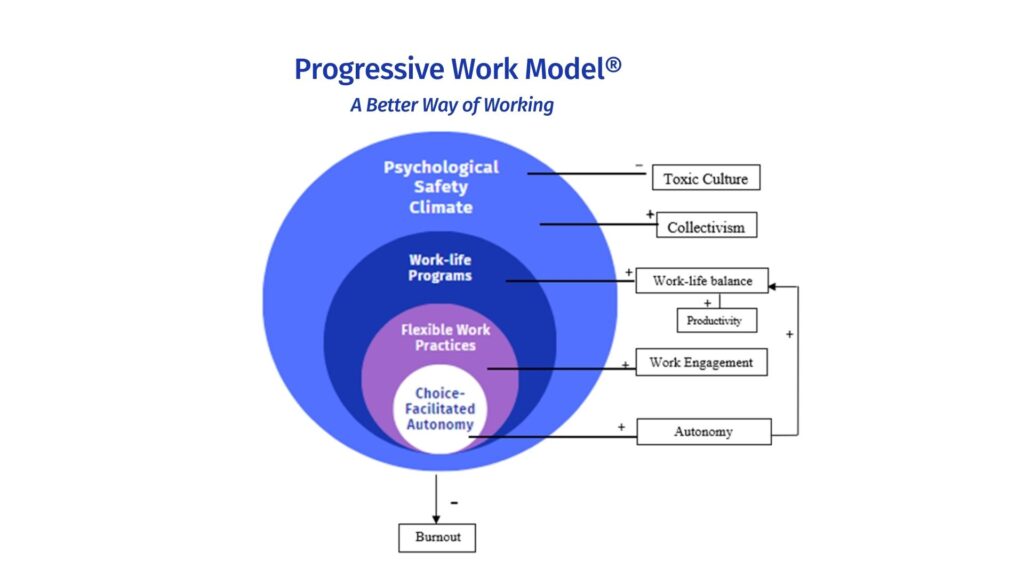
Despite these obstacles, Sub-Saharan Africa has a remarkable opportunity to lead the way in work innovation. The PWM, with its focus on psychological safety, autonomy, and flexibility, offers a transformative framework. By adopting this model, organizations in the region can not only address burnout, but also foster a more engaged, productive, and resilient workforce.
Psychological Safety: Building Trust in the Workplace
Psychological safety, the foundation of the PWM, is crucial for mitigating burnout and fostering innovation. In many Sub-Saharan African workplaces, hierarchical management styles stifle open communication and discourage feedback. This lack of psychological safety creates an environment of fear, disengagement, and stress.
To overcome these challenges, leaders must embrace participatory and inclusive management practices. Drawing from indigenous philosophies such as Ubuntu, which emphasizes shared humanity and collective growth, organizations can cultivate environments where employees feel valued and heard. For instance, peer-support groups and collaborative decision-making processes can reinforce trust and openness without significant financial investment. By fostering psychological safety, organizations can create a culture of resilience and mutual support, essential for navigating the uncertainties of the modern labor market.
Autonomy and Flexibility: Empowering the Workforce
Autonomy and flexibility are vital for addressing the challenges of rigid work structures and fostering a sense of control among workers. In Sub-Saharan Africa, where long commutes and inflexible schedules are common, these components can significantly reduce stress and improve work-life balance.
Flexible work practices, such as seasonal schedules and part-time roles, can be tailored to the region’s unique socio-economic context. For instance, in sectors like agriculture and retail, allowing workers to choose their work status—whether as employees or independent contractors—can provide stability while accommodating their personal needs. This dual-status approach not only empowers workers but also aligns with the informal employment patterns prevalent in the region.
Digital infrastructure, often limited in rural areas, presents a challenge to implementing flexibility. However, public-private partnerships, such as the Smart Africa initiative, demonstrate how governments and businesses can collaborate to expand digital access. By investing in low-cost internet solutions and subsidized mobile devices, organizations can bridge the digital divide and enable remote or hybrid work arrangements.
Work-Life Programs: Supporting Holistic Well-Being
Work-life programs are essential for addressing the intersection of professional and personal responsibilities. In Sub-Saharan Africa, where caregiving and familial obligations often take precedence, such programs can alleviate the strain on workers. For example, providing access to childcare, transportation subsidies, or microloans for family health expenses can significantly improve work-life balance.
However, the success of these programs hinges on fostering a psychologically safe environment where workers feel encouraged to utilize them. Awareness campaigns and peer advocacy can help dispel fears of job insecurity and promote the benefits of work-life programs. Additionally, cost-sharing models, involving government subsidies and community-based organizations, can make these programs financially viable for resource-constrained organizations.
The Cultural Context: Leveraging Collectivism
Sub-Saharan Africa’s collectivist culture, which prioritizes communal well-being over individual pursuits, presents a unique opportunity for implementing progressive work design. Unlike individualistic cultures that emphasize personal autonomy, collectivism fosters shared decision-making and group-oriented goals.
Organizations can leverage this cultural orientation by designing policies that align with collectivist values. For instance, group-based decision-making processes and community-focused work-life programs can resonate more strongly with the workforce. By integrating these cultural nuances into the PWM, organizations can ensure its acceptance and effectiveness.
Moving Forward: A Call to Action
The journey toward progressive work in Sub-Saharan Africa requires a collective effort from leaders, policymakers, and organizations. By prioritizing psychological safety, autonomy, flexibility, and work-life balance, the region can redefine its approach to work design. The PWM provides a scalable and culturally sensitive framework that addresses the unique challenges of the region while aligning with global trends.
This is not just a call for organizational change—it is a call for societal transformation. A progressive work ethos has the potential to unlock the full potential of Sub-Saharan Africa’s workforce, driving sustainable development and positioning the region as a leader in innovative work practices. Let’s seize this moment to create a future of work that is inclusive, resilient, and transformative. The time for progressive change is now. Be part of the solution. Signup for our free pilot program today.