By Dr. Monika M. Doss, DBA – Progressive Work Institute Founder, Executive Director
Organizational behavior scholar-practitioner with an emphasis on work design that reduces burnout, improves worker well-being, and optimizes organizational performance through Progressive Work.
The modern workforce is at a crossroads, and the time to act is now. For over a century, the traditional 9-to-5 work model has dictated how organizations structure labor. While initially revolutionary, this model now serves as a relic of an industrial past that ignores the evolving needs of today’s workforce. As a scholar-practitioner, my research shows the transformative potential of a new paradigm: the Progressive Work Model (PWM). Designed to mitigate burnout and align with the realities of contemporary work-life demands, the PWM offers an empirically grounded alternative that prioritizes well-being without sacrificing organizational performance.
The Problem: Burnout is an Epidemic
Burnout has reached alarming levels. Defined as a prolonged response to chronic workplace stress, burnout manifests in exhaustion, detachment, and inefficacy. Recent studies reveal that burnout is a global phenomenon impacting millions, with women disproportionately affected by the exhaustion dimension. The consequences are dire: reduced productivity, increased turnover, and significant mental and physical health challenges.
Traditional work structures, like the 9-to-5, with their rigidity and outdated assumptions about productivity, exacerbate these issues. The expectation that workers adhere to fixed hours and locations ignores individual differences and the demands of modern life. Worse, these structures cultivate environments that often lack psychological safety—a critical factor in preventing burnout. Only 26% of managers create psychologically safe environments, despite 89% of workers identifying this as essential. The gap between what workers need and what organizations provide is glaring.
The Progressive Work Model: A Global Solution for the Modern Workforce
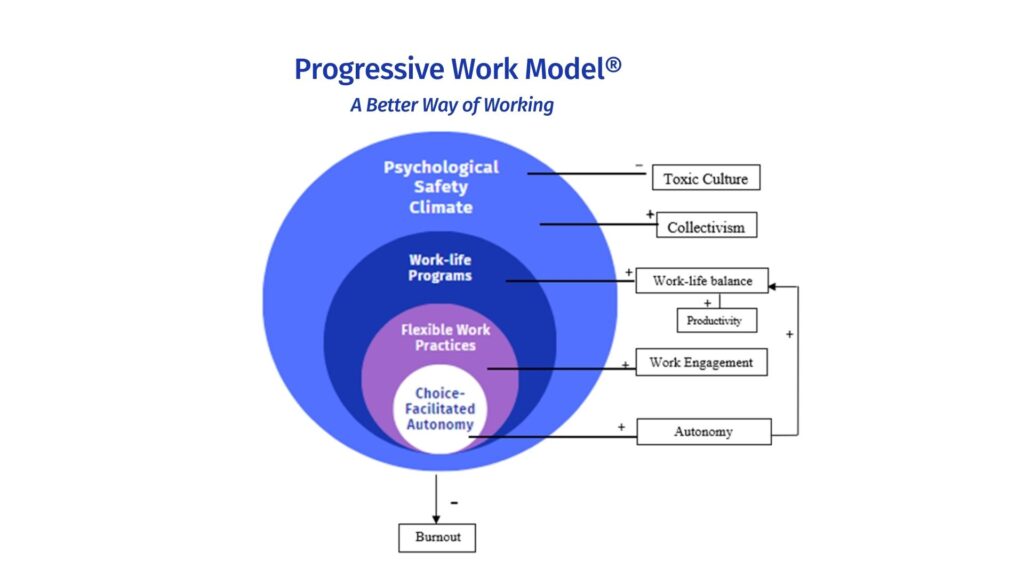
The PWM is a forward-thinking framework that incorporates choice-facilitated autonomy, flexible work practices, and work-life programs within a psychologically safe climate. Each of these components addresses key burnout predictors while fostering engagement and productivity.
- Choice-Facilitated Autonomy empowers workers to decide their employment classification as employees or independent contractors. This element addresses the autonomy dilemma, giving workers control over how they engage with their work. By enabling this choice, organizations can reduce feelings of powerlessness and disengagement, critical drivers of burnout.
- Flexible Work Practices provide control over where, when, and how work is performed. Whether through hybrid models, flextime, or condensed workweeks, these practices align with workers’ needs for adaptability. For example, global experiments with four-day workweeks have consistently shown improvements in productivity and well-being, with organizations reporting a 68% decrease in burnout and a 35% increase in work-life balance.
- Work-Life Programs extend support beyond the workplace, helping workers manage their personal and professional lives. These programs address systemic issues that contribute to burnout, such as unreasonable workloads and lack of support for caregiving responsibilities.
Evidence of Efficacy
The PWM is grounded in rigorous empirical research. My study surveyed over 8,484 workers across 81 countries and six continents, capturing diverse perspectives on work-life balance and burnout. The findings are clear: organizations that adopt progressive work practices see reductions in burnout, improved worker engagement, and enhanced organizational outcomes. Workers are not just demanding flexibility—they are demanding a better way of working that respects their agency.
The Cost of Inaction
Maintaining the status quo is no longer viable. Burnout costs U.S. organizations over $100 billion annually in healthcare spending. Turnover, a common outcome of burnout, leads to staggering recruitment and training costs, not to mention the loss of organizational knowledge and morale.
Beyond financial implications, the moral case for change is compelling. Workers deserve environments that support their well-being. They deserve to feel valued and heard. Failing to act perpetuates cycles of exploitation, disengagement, and inefficiency.
Why Now?
The COVID-19 pandemic was a turning point. It revealed the inadequacies of traditional work structures and accelerated demands for flexibility. Workers are voting with their feet, as evidenced by the Great Resignation and unprecedented levels of union activity. Organizations that resist change risk losing talent to competitors who prioritize progressive work.
Furthermore, the legislative landscape is shifting. Proposals like the Thirty-Two Hour Workweek Act and the Workforce Psychological Safety Act underscore growing recognition of the need for systemic reform. The PWM is not just a model for the future—it is a model for the present.
A Call to Action
For scholar-practitioners and organizational leaders, the imperative is clear: embrace the PWM and lead the charge toward a more equitable, sustainable future of work. This is not merely a moral obligation—it is a strategic advantage. Organizations that adopt progressive work practices will attract and retain top talent, foster innovation, and achieve long-term success.
The Progressive Work Model is not just a panacea, but it is a significant step forward. By addressing the root causes of burnout and aligning work structures with modern needs, the PWM offers a pathway to a better way of working. Let us have the courage to confront outdated traditions and embrace progress. Together, we can build a world where work enhances well-being, not detracts from it.
Be part of the solution. Signup for our free pilot program today.