By Dr. Monika M. Doss, DBA – Progressive Work Institute Founder, Executive Director
Organizational behavior scholar-practitioner with an emphasis on work design that reduces burnout, improves worker well-being, and optimizes organizational performance through Progressive Work.
It’s time to rebrand HR. Human Resources (HR) is one of the most underutilized departments in an organization because they are usually limited to operating within the status quo of protecting the organization. Workers opt to steer clear of HR because they view its main role as protecting the organization’s interest, not the workers. How about expanding the role of HR to protect the workers, too? HR is the nucleus of an organization because it reaches all levels of the organization and has the expertise to tailor progressive work to meet each department’s needs while still abiding by labor laws. To mitigate burnout, leadership must alter organizational systems and structures, starting with rebranding HR to include more decision-making autonomy. It’s imperative to rebrand HR for the future of work.
The Role of HR in Progressive Work
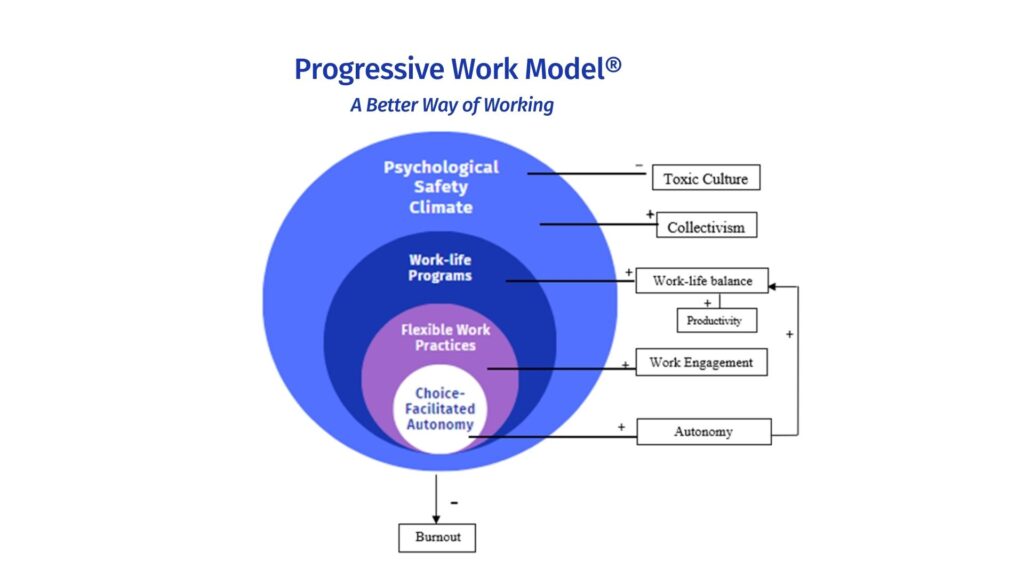
Progressive Work, a forward-thinking framework used to organize work activities and processes within an organization that meets the work-life balance needs of the modern workforce, is gaining momentum. A key to its success in being the standard for the way we work is leadership giving HR the decision-making authority to implement it. There is a reason why the Chief People Officer is a relatively new addition to the C-suite. The workforce is valuable, and violating labor laws can be costly.
Empowering HR
So, let HR allow applicants to decide their job status instead of HR and management pre-determining it. Let HR work with department managers to implement flexible work practices that work for that department. In addition, let HR review your current work-life programs and recommend ways to optimize them to meet your workforce’s current needs – so the ROI is optimized.
HR is the nucleus of an organization and should be a decision-making partner. Combining DEI with a strong psychological safety climate, and a focus on collectivism can create a more supportive and effective HR environment. Leadership plays a crucial role in this transformation.
- DEI – ensures that all voices are heard and valued, which enhances trust in HR as a facilitator of organizational culture. When leadership actively supports diverse perspectives, workers are more likely to connect w/HR & see it as a partner rather than an adversary.
- Psychological Safety Climate – leaders who model vulnerability and openness encourage open communication between HR and workers, fostering collaboration & reducing the perception that HR is solely a disciplinary or compliance function.
- Collectivism – focusing on collectivism reinforces the idea that everyone in the organization, including HR, shares a common goal of improving the workplace.
When leaders promote this shared vision, it dismantles the perception of HR as an isolated entity & promotes a sense of partnership. Integrating these elements requires commitment from leadership to transform HR’s role from being a support function to a strategic partner that advocates for workers while aligning w/organizational goals. This approach can help shift the narrative around HR, making it more about collaboration than blame & compliance.
Be part of the solution. Signup for our free pilot program