By Dr. Monika M. Doss, DBA – Progressive Work Institute Founder, Executive Director
Organizational behavior scholar-practitioner with an emphasis on work design that reduces burnout, improves worker well-being, and optimizes organizational performance through Progressive Work.
In today’s rapidly shifting work landscape, the concept of work-life balance is no longer a luxury; it is a necessity. Burnout, a global phenomenon costing economies billions annually, has underscored the urgency for workplace reforms that prioritize worker well-being. Among the solutions gaining traction, work-life programs stand out as a critical, evidence-backed strategy to restore balance, enhance productivity, and foster sustainable engagement. These programs—integral to the broader Progressive Work Model (PWM)—are not mere perks but a foundational component of a thriving modern workforce.
The Problem: Work-Life Imbalance and Its Fallout
Despite decades of research and numerous interventions, worker burnout persists as an epidemic. Traditional workplace structures, with rigid schedules and insufficient attention to workers’ personal lives, exacerbate stress and alienation. Workers find themselves trapped in environments where they are expected to sacrifice personal responsibilities and well-being for the illusion of organizational efficiency. A lack of organizational support for balancing work and life often results in a disengaged workforce, absenteeism, and skyrocketing turnover rates.
These outcomes, however, are not inevitable. Comprehensive work-life programs offer a way to reimagine work structures, making them conducive to both organizational performance and individual well-being.
What Are Work-Life Programs?
Work-life programs are organizational initiatives designed to help workers manage the dual demands of work and personal life. They include a broad spectrum of policies and resources, such as:
- Flexible scheduling: Allowing employees to tailor their work hours to better accommodate personal responsibilities.
- Family support services: Including parental leave, childcare subsidies, and eldercare assistance.
- Wellness initiatives: Such as mental health resources, fitness programs, and gym memberships.
- Professional development opportunities: Offering training and upskilling programs that align with workers’ career aspirations and personal goals.
These programs do more than improve morale; they address the structural roots of work-life conflict by creating environments where workers feel supported and valued.
The Research: Why Work-Life Programs Work
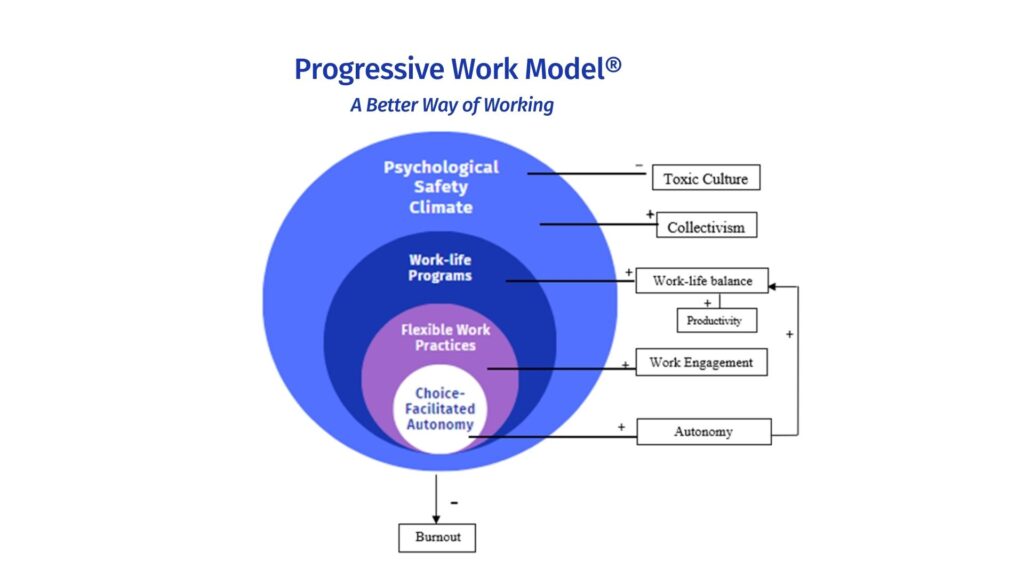
Empirical evidence consistently supports the effectiveness of work-life programs in reducing burnout and enhancing productivity. The Progressive Work Model highlights how work-life programs—alongside choice-facilitated autonomy and flexible work practices—mitigate the primary drivers of burnout, including unreasonable workloads, lack of control, and inadequate organizational support (Doss, 2024).
Doss’ 2024 study surveyed 8,484 workers globally across 81 countries and 6 continents, revealing that work-life programs reduce burnout rates. Workers with access to, and encouraged to use, these programs have more agency to balance their work and life domains, leading to better mental health outcomes and higher engagement.
Why Organizations Should Care
Organizations may hesitate to invest in work-life programs due to perceived costs or logistical complexities. However, such short-sightedness overlooks the significant return on investment these programs provide. The benefits are tangible and substantial:
- Reduced turnover costs: Burnout-induced turnover is expensive. Replacing a worker can cost anywhere from 50% to 200% of their annual salary. Work-life programs can dramatically reduce turnover rates.
- Increased productivity: A well-supported workforce is a more engaged and productive one. Workers who feel their needs are acknowledged are less likely to experience the cognitive and emotional exhaustion that hampers performance.
- Enhanced organizational reputation: Organizations known for prioritizing worker well-being attract top talent, giving them a competitive edge in the labor market.
Moreover, work-life programs align with shifting workforce demographics. Millennials and Gen Z, who now constitute the majority of the workforce, prioritize flexibility. For these workers, progressive policies are not a “nice-to-have” but a “must-have.”
The Intersection of Culture and Policy
Effective implementation of work-life programs requires more than just policy changes; it necessitates a cultural shift. A toxic workplace culture can undermine even the most well-intentioned initiatives. Organizations must foster psychological safety, inclusivity, and mutual respect to ensure these programs succeed.
Leaders play a pivotal role in this transformation. By modeling work-life balance themselves, they can set a precedent that encourages employees to take full advantage of available resources without fear of stigma or retaliation.
A Call to Action
For organizations looking to remain competitive and sustainable, the message is clear: adopt work-life programs now, or risk being left behind. These programs are not just remedies for burnout but essential building blocks for a resilient, future-ready workforce.
The question for business leaders is no longer whether they can afford to implement work-life programs, but whether they can afford not to. By prioritizing these initiatives, organizations can unlock the full potential of their workforce, creating a win-win scenario where workers and organizations thrive together.
As the workplace continues to evolve, work-life programs offer a beacon of hope. They represent an opportunity to redefine the worker-organization relationship, shifting from one of extraction to one of mutual support and growth. In doing so, we can build not just better organizations, but a better future of work.
Be part of the solution. Signup for our free pilot program today.