By Dr. Monika M. Doss, DBA – Progressive Work Institute Founder, Executive Director
Organizational behavior scholar-practitioner with an emphasis on work design that reduces burnout, improves worker well-being, and optimizes organizational performance through Progressive Work.
In the intricate tapestry of the contemporary workforce, the specter of burnout looms ominously, demanding a reevaluation of traditional work paradigms. In the aftermath of the global upheaval wrought by the COVID-19 pandemic, a revolutionary solution has emerged – the Progressive Work Model™ (PWM). Backed by exhaustive research spanning six continents and 81 countries, this article aims to illuminate the PWM’s potential to redefine work-life balance by prioritizing collectivism. It serves as a clarion call for business leaders to embrace a cultural shift that harmonizes with the prevailing preferences of the global workforce.
The Persistent Problem of Burnout:
The relentless spread of burnout, compounded by the recent global challenges, necessitates a profound reexamination of conventional work structures. This crisis not only affects the mental health of individuals but also exacts a heavy toll on organizational productivity and efficiency. As organizations grapple with the repercussions of unprecedented disruptions, a paradigm shift is imperative to navigate the future of work successfully.
Cultural Dimensions: A Global Lens:
Before delving into the transformative PWM, it is crucial to comprehend the empirical foundation upon which it rests. Across continents and cultures, the Hofstede Cultural Dimensions measure and the Schwartz Value Survey unveil the profound impact of cultural values on work-related expectations. The resounding preference for collectivism among the global workforce echoes through the data, forming the bedrock of the PWM.
Collectivism as a Cornerstone:
Workers prioritize collectivism. So at the heart of the Progressive Work Model™ lies collectivism – a concept that resonates universally with workers. The empirical findings underscore a global inclination towards a collective approach to work, emphasizing collaboration, shared responsibility, and a profound sense of belonging. Business leaders are presented with an unprecedented opportunity to harness this collective energy, not merely as a remedy for burnout but as a catalyst for organizational success.
Empowering Job Status Choices:
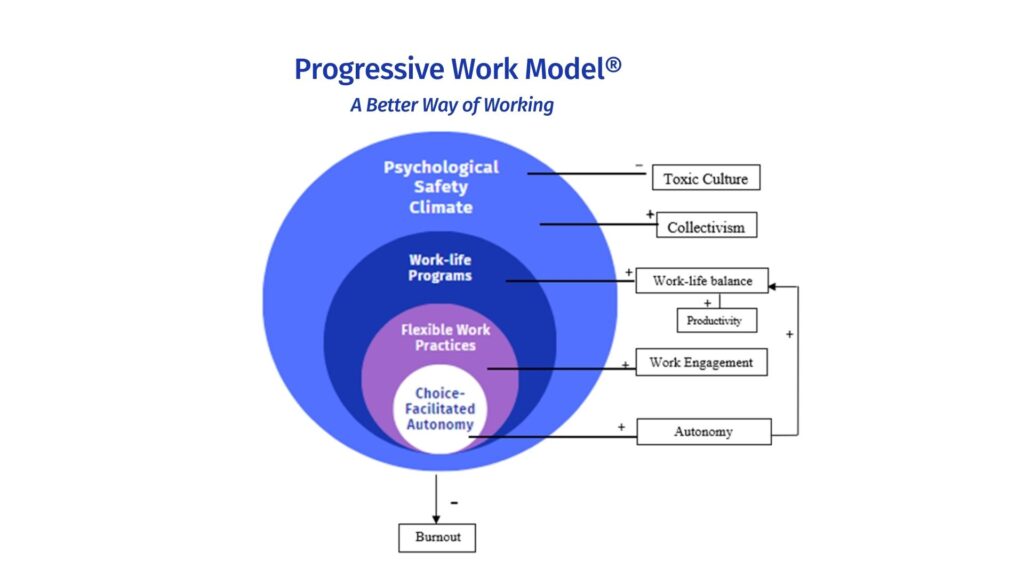
The PWM empowers individuals to make job status choices aligned with their cultural values. In cultures valuing stability and security, employees may lean towards traditional roles, while those prioritizing independence may opt for the flexibility of independent contracting. By acknowledging and accommodating these cultural nuances, organizations can build a workforce that feels fulfilled and purposeful in their roles.
Flexible Work Practices: A Cultural Imperative
Flexibility, a cornerstone of the PWM, is not a one-size-fits-all solution. In individualistic cultures, autonomy is paramount, making flexible work practices a powerful tool in reducing burnout. Conversely, in cultures valuing traditional structures, resistance to flexibility may stem from concerns about productivity. Business leaders must recognize the nuanced interplay of culture in the implementation of flexible work practices to ensure a seamless transition.
Cultural Fit and Work-Life Programs
The PWM recognizes that a cultural fit is indispensable in the successful implementation of work-life programs. Organizations must acknowledge that perceptions of work-life balance vary across cultures. In collectivist cultures, these programs are not just appreciated; they are essential in reducing burnout. By providing resources and support aligned with cultural values, organizations can create environments conducive to employee well-being.
Psychological Safety: The Glue of Collectivism
Psychological safety emerges as the linchpin in fostering a collectivist workplace culture. The PWM’s emphasis on cultivating environments where individuals feel secure and supported resonates strongly with the global workforce. Leaders must prioritize psychological safety, recognizing its negative association with burnout and toxic workplace cultures.
Implementing the Progressive Work Model™
The empirical support, strategic focus, and cultural alignment offered by the PWM present a compelling case for implementation. It’s not just a theoretical framework but a pragmatic solution to burnout. Organizations can catalyze change by strategically addressing unreasonable workloads, pay gaps, and toxic workplaces. The PWM offers a roadmap to a future where a collectivist culture is not just an option but a necessity.
To unlock the full potential of the PWM, leaders must instill a collective mindset that permeates every aspect of the organizational culture, from decision-making to daily operations. This cultural shift requires commitment, adaptability, and a recognition of the inherent value in fostering a workplace where the collective well-being of the workforce is paramount.
Leadership emerges as the linchpin in cultivating collectivism within organizations. By championing a culture of openness, collaboration, and shared purpose, leaders can set the tone for a workplace where the whole is greater than the sum of its parts. This demands a departure from traditional hierarchical models toward more inclusive and participatory leadership styles.
Strategic Implementation – A Step-by-Step Guide
Implementing the PWM necessitates a strategic approach that aligns with the unique cultural fabric of each organization. Leaders must assess the current cultural landscape, identify areas for improvement, and craft a comprehensive strategy that integrates collectivism seamlessly. This includes revisiting policies, restructuring teams, and fostering an environment where diverse perspectives are not just welcomed but celebrated.
Overcoming Resistance and Fostering Buy-In
Change, even when rooted in empirical research and cultural alignment, can face resistance. Leaders must anticipate and address concerns proactively. Employee buy-in is crucial, and transparent communication about the benefits of a collectivist culture is paramount. Showcasing success stories, highlighting improved well-being metrics, and emphasizing the positive impact on productivity can serve as powerful catalysts for change.
Measuring Success: Key Performance Indicators
Success in implementing the PWM is not a nebulous concept; it demands tangible metrics. Key Performance Indicators (KPIs) should extend beyond traditional productivity metrics to encompass employee satisfaction, retention rates, and, crucially, reduced burnout. Regular assessments and recalibrations ensure that the organizational culture continues to evolve in harmony with the PWM principles.
The Global Impact of Collectivist Work Cultures
As organizations across the globe embrace collectivism, the potential for a profound global impact becomes evident. Beyond individual organizational success, a collective shift toward prioritizing employee well-being reshapes the narrative of work on a global scale. The PWM becomes a beacon, guiding industries, policymakers, and leaders toward a future where work is not just a means to an end but a fulfilling and sustainable endeavor.
In the face of an escalating burnout crisis, the PWM stands as a beacon of hope, offering not just a remedy for the symptoms but a transformative prescription for the very essence of work. As workers worldwide prioritize collectivism, organizations have the unprecedented opportunity to be at the vanguard of a movement that redefines the future of work. This article serves as a rallying cry for business leaders to recognize the imperative of aligning organizational cultures with the prevailing values of their workforce. By embracing the PWM, organizations not only mitigate burnout but also lay the foundation for a future where collective well-being is the cornerstone of success. In prioritizing collectivism, businesses don’t just change the way they work; they become architects of a future where the human experience in the workplace is paramount.
Be part of the solution. Signup for our free pilot program today.