By Dr. Monika M. Doss, DBA – Progressive Work Institute Founder, Executive Director
Organizational behavior scholar-practitioner with an emphasis on work design that reduces burnout, improves worker well-being, and optimizes organizational performance through Progressive Work.
In the evolving landscape of global work structures, it is clear that traditional methods of organizing work have reached a critical juncture. As burnout and worker disengagement continue to rise, organizations are confronted with a fundamental question: Can we continue with the status quo, or must we rethink how we work in order to protect the well-being of workers and improve productivity? The answer is found in a new approach to work that redefines the very structure of labor—one that not only meets the needs of the modern workforce but also mitigates burnout through a Progressive Work Model (PWM).
The Crisis of Burnout
Burnout, a psychological syndrome resulting from chronic workplace stress, has emerged as one of the most pervasive challenges of our time. According to Maslach (2001), burnout manifests through three key dimensions: overwhelming exhaustion, feelings of cynicism, and a diminished sense of accomplishment. The consequences are severe—not just for individual workers, but also for organizations. Workers experiencing burnout are 6x more likely to quit their jobs, and those affected by burnout often exhibit reduced productivity, increased absenteeism, and disengagement, all of which undermine organizational performance (McKinsey, 2022).
While the causes of burnout are multifaceted, a significant driver is the mismatch between traditional work structures and the needs of the modern worker. The rigid 9-to-5 schedule, demanding workloads, toxic workplace cultures, and lack of flexibility exacerbate stress and contribute to burnout (Gallup, 2023). This disconnect between how work is structured and what workers need to thrive has led to a crisis, with surveys revealing that a substantial portion of the workforce is experiencing burnout on a chronic basis (Gallup, 2021). The COVID-19 pandemic only heightened these issues, making it clear that a rethinking of work structures is long overdue.
Enter the Progressive Work Model
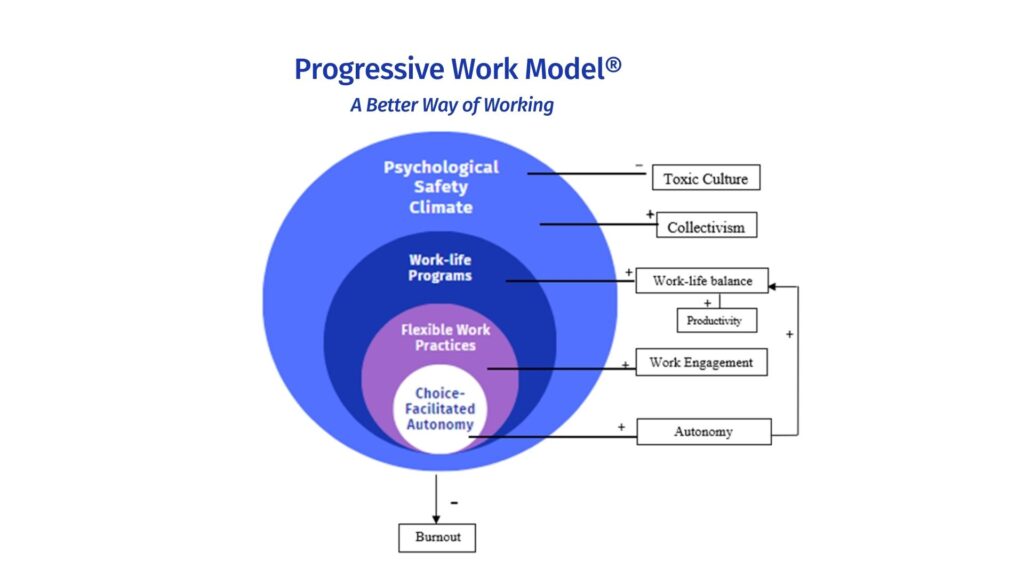
The Progressive Work Model (PWM) represents a forward-thinking framework designed to address the root causes of burnout while fostering greater engagement and well-being among workers. This model combines three core components: choice-facilitated autonomy, flexible work practices, and comprehensive work-life programs. By providing workers with more control over their work and life, PWM aims to create environments where burnout is not just mitigated but actively prevented.
Choice-Facilitated Autonomy
At the heart of PWM is the concept of choice-facilitated autonomy, a novel approach that empowers workers to choose their job status when accepting a job rather than the organization pre-determining it—whether as an independent contractor (IC) or an employee (Doss, 2024). This approach allows workers to negotiate their terms of employment, ensuring that they can take control of their pay rates, schedules, and workloads. Such autonomy directly addresses burnout predictors like low control over work conditions and pay disparities, both of which are central to worker dissatisfaction and disengagement (Maslach & Leiter, 2008).
Incorporating autonomy into work design has been shown to have numerous benefits. It allows workers to tailor their roles to their personal and professional needs, reducing stress and promoting a healthier work-life balance. When workers have more control over their work, they are more likely to feel engaged, motivated, and committed to their roles (Schaufeli, 2013). Furthermore, a workforce that feels empowered is less likely to experience feelings of helplessness and burnout.
Flexible Work Practices
Flexible work practices are another pillar of the PWM, offering workers the ability to choose when, where, and how they work. These practices include options such as flextime, hybrid work, compressed workweeks, and remote work. Research has shown that flexibility in work arrangements leads to significant reductions in stress and burnout (Allen et al., 2015). By enabling workers to manage their work hours and location, organizations foster greater work-life integration, a crucial factor in preventing burnout.
A growing body of evidence suggests that flexible work arrangements not only improve well-being but also enhance productivity. For example, a study of workers in the UK revealed that a four-day workweek led to a 16% decrease in burnout and a 35% improvement in work-life balance (Grant, 2021). Similarly, research conducted by Microsoft Japan found that a compressed workweek led to a 40% increase in productivity (Coote, 2021). These findings illustrate that flexibility can be a powerful tool for boosting both employee satisfaction and organizational performance.
Work-Life Programs
Work-life programs are another essential component of the PWM, aiming to support employees in balancing the demands of work and personal life. These programs encompass a range of initiatives, including paid time off, childcare support, mental health resources, and wellness programs. By offering employees resources to manage their personal responsibilities, organizations signal a commitment to their well-being and help reduce the stress that often leads to burnout (Kalliath & Brough, 2008).
The importance of work-life programs cannot be overstated, especially in light of the increasing demands placed on workers. A 2023 Gallup survey found that 78% of workers believe their organizations should provide more support for mental health, yet only 47% reported that their organizations offered such support (Gallup, 2023). This gap highlights a critical opportunity for organizations to enhance their work-life programs and, by doing so, support the mental health of their workforce.
The Benefits of the PWM
Organizations that adopt the PWM are likely to experience a wide range of benefits. First and foremost, they will see a reduction in burnout, which directly translates to lower turnover rates, decreased absenteeism, and higher productivity. A workforce that feels supported by flexible work practices and empowered by autonomy is more likely to be engaged and committed to their roles, which contributes to a more stable and motivated workforce.
Additionally, PWM fosters a culture of psychological safety, which has been shown to positively correlate with reduced burnout (Sherf et al., 2021). In environments where workers feel safe to express concerns and take interpersonal risks without fear of reprisal, burnout is less likely to take root. This creates a virtuous cycle where worker well-being and organizational performance reinforce each other.
Finally, PWM aligns with the evolving expectations of the modern workforce. As younger generations like Millennials and Gen Z increasingly demand flexibility, autonomy, and work-life balance, organizations that fail to adapt risk losing their most talented workers. According to Deloitte (2021), 80% of workers would turn down a job without work flexibility, and 46% of Millennials attribute business success to flexible work practices. Organizations that embrace PWM are better positioned to attract and retain top talent, giving them a competitive advantage in the marketplace.
A Call to Action
The evidence is clear: the traditional 9-to-5 work structure no longer serves the needs of today’s workforce. To mitigate burnout and foster a healthier, more engaged workforce, organizations must embrace the Progressive Work Model. By integrating choice-facilitated autonomy, flexible work practices, and comprehensive work-life programs, organizations can create a work environment where employees are not just productive but thriving.
As a scholar-practitioner, I urge organizations to take a bold step forward and embrace a new way of working—one that prioritizes the well-being of workers and positions them for success in the 21st century. The future of work is progressive, and it is time for organizations to make the shift. Signup for our free pilot program today.