By Dr. Monika M. Doss, DBA – Progressive Work Institute Founder, Executive Director
Organizational behavior scholar-practitioner with an emphasis on work design that reduces burnout, improves worker well-being, and optimizes organizational performance through Progressive Work.
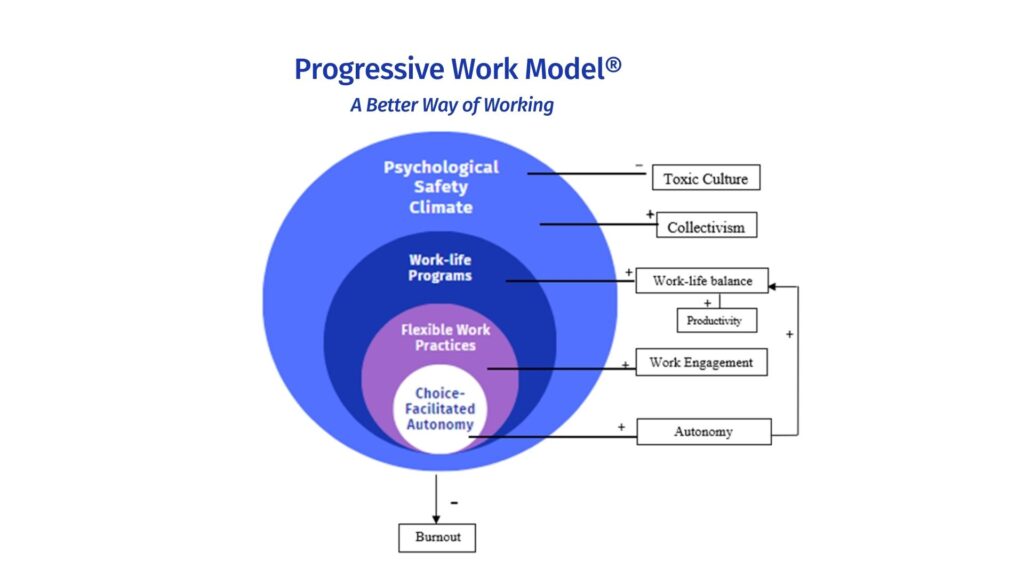
In an era marked by unprecedented shifts in work dynamics, work-life programs are emerging as a linchpin for combating burnout—a pervasive challenge that undermines both employee well-being and organizational effectiveness. As the Progressive Work Model (PWM) empirically demonstrates, these programs are transformative tools that mitigate burnout when implemented with intentionality and sensitivity to cultural nuances. Organizations must recalibrate their approach to work-life programs, not as ancillary benefits but as foundational to a sustainable, human-centric workplace.
The Crisis of Burnout
Burnout is not a new phenomenon, but its implications have intensified in the wake of the global COVID-19 pandemic. With nearly 70% of the global workforce experiencing burnout, the consequences ripple across industries, impacting health, productivity, and retention. Burnout manifests as a triad of exhaustion, cynicism, and inefficacy, arising from chronic stress and inadequate resources. The cost? An estimated $322 billion globally in turnover.
Work-life programs present a tangible solution, offering tools to navigate the competing demands of work and personal life. These initiatives, ranging from parental leave to mental health support, are no longer luxuries but necessities. However, their success hinges on thoughtful work design and accessibility.
Regionality Matters
Research underpinning the PWM highlights the critical role of regionality in the effectiveness of work-life programs. The global dataset spanning 6,679 individuals from 68 countries and 6 continents revealed stark disparities in program usage and impact based on cultural, economic, and regulatory contexts. For example, paid parental leave—a cornerstone of work-life balance—is standard across much of Europe but remains a rarity in the United States. Similarly, access to mental health resources varies dramatically, affecting workers’ ability to manage stress and prevent burnout.
Regional tailoring of work-life programs ensures relevance and efficacy. In collectivist cultures, programs emphasizing family care may resonate more deeply, whereas individualistic societies might prioritize mental health support or financial counseling. Organizations must navigate these nuances to design programs that align with local norms and expectations while addressing universal human needs.
Bridging the Gap Between Access and Utilization
A recurring theme is the gap between access to and utilization of work-life programs. Fear of stigma, lack of psychological safety, and unawareness are significant barriers preventing employees from leveraging these resources. For instance, U.S. service workers often forgo sick leave out of fear of reprisal, signaling a need for cultural shifts alongside policy changes.
Organizations must foster environments where accessing work-life programs is normalized and encouraged. This involves training managers to model program use, promoting transparency around available resources, and embedding psychological safety into workplace cultures.
The ROI of Work-Life Programs
The business case for work-life programs is compelling. Burnout not only affects individual health but also erodes organizational performance through absenteeism, turnover, and reduced engagement. Implementing comprehensive, regionally tailored programs can reverse these trends, yielding measurable returns on investment (ROI).
Consider the example of Employee Assistance Programs (EAPs), the most common type of work-life program. Originally introduced to address substance abuse, EAPs now encompass a wide array of services, including mental health counseling and legal assistance. Despite their established benefits, utilization rates remain low due to inadequate promotion and accessibility. By reimagining EAPs as integral to organizational well-being, companies can unlock their potential as burnout mitigators and productivity enhancers.
Toward a Culture of Balance and Resilience
At its core, the shift to progressive work is about redefining success—not as relentless productivity but as balanced, sustainable engagement. This requires moving beyond superficial fixes to address structural issues that drive burnout. Work-life programs are essential but must be integrated into a broader cultural transformation that values rest, flexibility, and psychological safety.
Organizations must also rethink their approach to independent contractors, a growing segment of the workforce often excluded from traditional benefits. Extending work-life programs to contractors not only levels the playing field but also strengthens the overall ecosystem of work, fostering collaboration and loyalty.
A Call to Action
The PWM underscores that progressive work design is not a theoretical exercise but an urgent imperative. Organizations have a responsibility to prioritize worker well-being through intentional, evidence-based interventions. The time to act is now.
Leaders must:
- Assess Regional Needs: Conduct audits to understand the unique challenges and preferences of their workforce by region.
- Close the Utilization Gap: Address cultural and organizational barriers to program adoption through targeted communication and training.
- Integrate Work-Life Programs Holistically: Embed these initiatives into the fabric of organizational culture, ensuring they are perceived as rights, not perks.
- Invest in Research and Innovation: Continuously evaluate the impact of programs and adapt them to evolving workforce dynamics.
Work-life programs are powerful tools in the fight against burnout. When implemented thoughtfully and supported by a culture of balance, they can transform workplaces into hubs of resilience and humanity. By embracing this vision of progressive work, organizations can ensure that productivity and well-being coexist harmoniously, unlocking the full potential of their most valuable asset: their people.
The journey to progressive work is challenging but essential. Let us rise to the occasion, not just for the sake of the workforce but for the future of work.
Be part of the solution. Signup for our free pilot program today.