By Dr. Monika M. Doss, DBA – Progressive Work Institute Founder, Executive Director
Organizational behavior scholar-practitioner with an emphasis on work design that reduces burnout, improves worker well-being, and optimizes organizational performance through Progressive Work.
In the ever-evolving landscape of work, the balance between organizational needs and worker well-being often teeters precariously. As we navigate the challenges of burnout, mass resignations, and shifting work models, a pivotal question emerges: How can organizations empower workers to thrive? An answer lies in autonomy—a concept that, when embraced, can revolutionize our approach to work and create a sustainable, productive, and fulfilling environment for all.
Autonomy: The Core of Engagement and Well-being
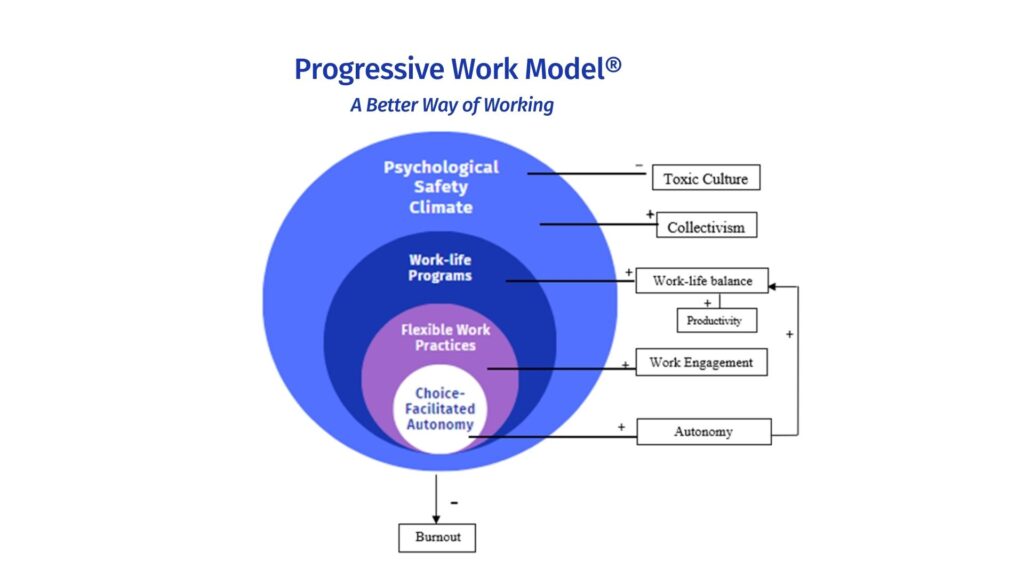
At its heart, autonomy represents the freedom for individuals to make choices about how, when, and where they work. This principle is not merely a philosophical ideal but a practical necessity supported by decades of research. The Job Characteristics Theory highlights autonomy as a critical driver of work engagement, leading to enhanced productivity and reduced burnout. Similarly, Self-Determination Theory identifies autonomy as a basic psychological need essential for well-being and motivation.
Autonomy is more than a perk—it is a lifeline in the modern workplace. Workers with greater control over their tasks report higher levels of satisfaction, creativity, and resilience. Yet, for many, this ideal remains out of reach due to rigid structures and outdated policies.
Burnout: A Symptom of a Broken System
The consequences of neglecting autonomy are dire. Burnout—a state of emotional, physical, and mental exhaustion—has reached epidemic levels. In the United States, 78% of millennials and Gen Z workers report experiencing burnout. This phenomenon, exacerbated by the COVID-19 pandemic, fueled the Great Resignation, with millions leaving their jobs in search of better work-life balance.
Rigid work models are a significant contributor to this crisis. The traditional 9-to-5 often fails to accommodate the diverse needs and lifestyles of today’s workforce. When organizations impose inflexible structures, they stifle creativity, reduce engagement, and increase stress, ultimately leading to disengagement and high turnover rates.
The Case for Choice-Facilitated Autonomy
A relatively new concept, choice-facilitated autonomy, offers a path forward. This model allows workers to decide their employment status—whether as employees or independent contractors (ICs)—based on their personal and professional needs. The majority, 72.3%, of the global workforce considers the option to choose choose job status when accepting a job to be important. By shifting the power of choice from organizations to individuals, we can create a more equitable and adaptive work environment.
When workers are empowered to choose, they align their roles with their values and goals, fostering a deeper sense of ownership and engagement. For example, ICs often enjoy greater flexibility, enabling them to manage work-life boundaries more effectively. Employees, on the other hand, may benefit from stability and structured support systems. The critical point is that the choice rests with the worker, not the organization.
Flexibility: A Catalyst for Change
Beyond job status, flexibility in work practices is essential. Hybrid practices, such as the 3-2-2 schedule—three days on-site, two days remote, and two days off—have emerged as popular alternatives to traditional structures. These practices cater to a broader spectrum of worker needs, balancing productivity with personal well-being.
Flexible work practices also address gender disparities in burnout. Women, who often bear a disproportionate share of caregiving responsibilities, are particularly vulnerable to the pressures of inflexible schedules. By adopting inclusive policies, organizations can promote equality and mitigate the systemic factors that exacerbate burnout.
Cultural Considerations: One Size Does Not Fit All
While autonomy is universally beneficial, its application must be culturally sensitive. Individualistic cultures, such as those in the United States and Western Europe, often prioritize personal freedom and self-expression, making autonomy a natural fit. In contrast, collectivist cultures may value group harmony and decision-making, requiring a more nuanced approach.
Organizations operating across cultural boundaries must recognize these differences and tailor their strategies accordingly. By fostering dialogue and collaboration, they can create policies that respect diverse values while upholding the principles of autonomy.
Overcoming Resistance: The Role of Leadership
Implementing autonomy-driven models requires a shift in organizational mindset. Resistance often stems from a fear of losing control or skepticism about workers’ ability to self-manage. However, evidence suggests that autonomy enhances, rather than diminishes, organizational performance.
Leadership plays a critical role in this transformation. By modeling trust and accountability, leaders can create a culture where autonomy thrives. This includes providing the necessary tools and support for workers to succeed, such as access to training, technology, and transparent communication channels.
The Way Forward: A Call to Action
The urgency of embracing autonomy cannot be overstated. As burnout continues to erode the workforce, organizations must prioritize well-being as a core business strategy. This requires bold action and a willingness to challenge the status quo.
First, organizations should re-evaluate their employment policies to incorporate choice-facilitated autonomy. This includes offering dual-status job postings, one for employee & one for independent contractor, ensuring compliance with labor laws to prevent misclassification.
Second, flexible work practices must become the norm, not the exception. By prioritizing flexibility and rethinking traditional schedules, organizations can create environments where workers thrive.
Finally, leaders must champion a culture of autonomy. This involves not only empowering workers but also holding themselves accountable for fostering trust and inclusivity.
Concluding Thoughts: Building a Progressive Workforce
Autonomy is not a luxury—it is a necessity for a progressive workforce. By prioritizing choice, flexibility, and cultural sensitivity, we can create a future where work is not a source of stress but a platform for growth and fulfillment.
The time to act is now. Let us embrace autonomy as the cornerstone of a new work paradigm—one that values people, promotes equity, and drives sustainable success. Together, we can build a healthier, more engaged workforce that thrives in the face of change.
Be part of the solution. Signup for our free pilot program.